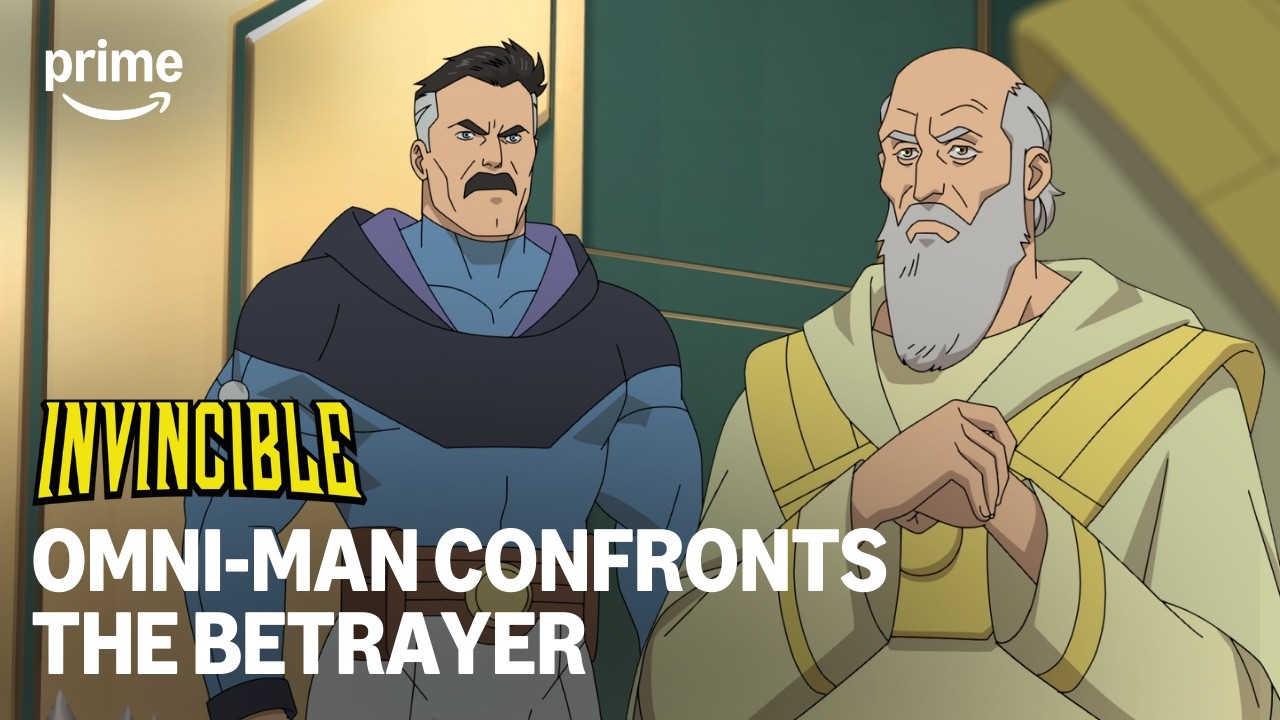
Invincible's Betrayers: Thaedus and the Coalition Spy Explained
The universe of *Invincible* is a brutal, captivating place, teeming with formidable heroes, terrifying villains, and a complex web of moral ambiguities. Among the most intriguing figures are those labeled "betrayers"—individuals whose actions fundamentally reshape the galactic landscape. When fans search for "
Invincible The Betrayer," two distinct figures often emerge, each representing a different facet of disloyalty and its profound consequences. This article will delve into the identities and motivations of these key characters: Thaedus, the legendary "Great Betrayer" of the Viltrumite Empire, and the more clandestine spy operating within the Coalition of Planets. Understanding their roles is crucial to grasping the intricate power struggles that define the *Invincible* narrative.
Thaedus: The Original "Invincible The Betrayer"
For eons, the Viltrumite Empire was a force of unparalleled conquest, its warriors imposing their will across countless stars. Yet, even within this monolithic empire, dissent festered, culminating in the radical actions of one individual: Thaedus. He is unequivocally referred to in Viltrumite lore as the "Great Betrayer," a title that encapsulates the depth of his defiance.
The Scourge and the Empire's Fall
To truly appreciate Thaedus's impact, we must first understand the Viltrumite Empire before its catastrophic near-demise. We glimpse this era through the eyes of a young Nolan, Mark Grayson's father, on his home planet of Viltrum. Here, children are indoctrinated from a tender age, learning about Thaedus's betrayal—specifically, his role in killing Argall, a significant figure in Viltrumite history. Nolan's own brutal coming-of-age ritual, a beatdown by his parents designed to harden him for war, exemplifies the unforgiving culture that Thaedus rejected.
However, a far greater tragedy soon eclipsed even Thaedus's perceived treachery. The Scourge virus, delivered by an unknown foreign object, ravaged Viltrum, wiping out billions of its inhabitants in a blink. The scale of death was so immense that bodies were simply launched into space, their mass eventually forming a chilling, macabre ring around the planet—a testament to the empire's sudden fragility. Only 50 Viltrumites, including Nolan, Conquest, Kregg, and Anissa, survived this galactic plague. This cataclysmic event left the empire fractured but undeterred, forcing them to adopt a new, desperate strategy for survival and expansion, heavily influenced by their reduced numbers and the enduring legacy of Thaedus's actions.
Thaedus's Defiance and the Birth of the Coalition
Thaedus's betrayal predates the Scourge, making his actions all the more remarkable. He was the *first* Viltrumite to unequivocally turn his back on the empire's brutal expansionist philosophy. His killing of Argall, framed as an act of treason by the Viltrumites, was in fact a pivotal moment that galvanized resistance. Far from being a simple act of defiance, Thaedus’s actions were driven by a profound ideological disagreement with Viltrumite tyranny. He saw their ruthless conquests not as strength, but as a path to galactic suffering.
In the wake of his defection, Thaedus became instrumental in forming the Coalition of Planets, an interstellar alliance specifically designed to oppose the Viltrumite Empire. As Allen the Alien's boss and a strategic mastermind, Thaedus continues to wage a covert war against his former kin, proving that one Viltrumite's "betrayal" can be the galaxy's salvation. His story forces us to question whether loyalty to an oppressive regime is truly virtuous, or if betraying such a system is the truest form of heroism. To explore the complex motivations behind his groundbreaking decision, you can read more in
Thaedus's Betrayal: Why He Turned Against the Viltrumites.
The Viltrumite Rebuilding Strategy: A Consequence of Betrayal and Scourge
The catastrophic loss of life from the Scourge virus, combined with the underlying ideological challenges posed by figures like Thaedus, forced the surviving Viltrumites to adapt their strategy. Their goal remained unwavering: restore the empire's glory and numerical strength. However, with only 50 pure-blooded members left, direct procreation amongst themselves was not an option due to the risks of severe inbreeding and birth defects.
This led to a brutal, pragmatic solution: *fornication with other species*. The Viltrumites would conquer planets, mate with the native populations, and assess the offspring for Viltrumite strength. Nolan's success in fathering Mark, whose immense power is undeniable, became a blueprint for this new strategy, making Earth a prime target for Viltrumite repopulation efforts. The dark reality behind this plan is that if the offspring proved insufficiently powerful, the entire planet would face genocide. This ruthless approach highlights the Viltrumites' single-minded determination, a desperation born from near-extinction, and a grim testament to the enduring threat that Thaedus sought to eradicate.
The Coalition Spy: A More Subtle Betrayal
While Thaedus's betrayal was a grand, overt act that shaped an entire resistance movement, another, more insidious form of treachery festered within the very heart of that resistance. The Coalition of Planets, headquartered on Talescria and led by Thaedus, represented the galaxy's best hope against the Viltrumites. Yet, even this bastion of freedom was compromised by an internal mole.
This "betrayer" was not a Viltrumite defecting to the other side, but a trusted member of the Coalition feeding intelligence to the enemy. Fan discussions and crucial plot revelations have identified this mole as
Data Twin II, one of the data-entry specialists. For years, Data Twin II had been secretly relaying vital information directly to the Viltrumite regent, Thragg, severely undermining the Coalition's efforts. This form of betrayal is far more discreet and often more dangerous in its subtlety. Whereas Thaedus's actions were a clear line in the sand, Data Twin II's treachery was a slow, corrosive poison, weakening the resistance from within. Such internal threats can be devastating, highlighting the importance of vigilance even among allies. The constant threat of espionage underscores the perpetual struggle for power in the *Invincible* universe, reminding us that enemies can sometimes hide in plain sight.
The Many Faces of Betrayal in Invincible
The concept of "
Invincible The Betrayer" is multifaceted, reflecting the complex moral landscape of the series. Thaedus, the "Great Betrayer," embodies a principled defiance—his actions, though labeled treason by the Viltrumites, are heroic to countless others. He betrayed an empire he viewed as tyrannical, sacrificing his loyalty to his race for a greater cosmic good. His story compels us to consider how perspective shapes our understanding of right and wrong, and whether breaking an unjust law is truly a betrayal. For a deeper dive into his legacy and the impact of his actions, refer to
Unmasking Thaedus: The Great Betrayer of the Viltrumite Empire.
In stark contrast, Data Twin II represents a more conventional, self-serving betrayal. This mole's actions served to directly aid an oppressive force, endangering countless lives and sabotaging the very organization dedicated to protecting them. This form of betrayal, driven by unknown motives (perhaps coercion, greed, or misplaced ideology), highlights the vulnerability of even the strongest alliances to internal compromise.
The narratives of Thaedus and Data Twin II serve as powerful reminders that betrayal is not monolithic. It can be a catalyst for revolution, a strategic necessity, or a corrosive force that undermines trust and stability.
Conclusion
The *Invincible* universe masterfully explores the intricate dynamics of loyalty and betrayal through characters like Thaedus and Data Twin II. Whether it's the legendary "Great Betrayer" Thaedus, who turned against his own kind to forge a resistance, or the insidious Coalition spy, Data Twin II, whose quiet treachery threatened to unravel everything, these figures are central to the overarching conflict. They force us to examine the nuances of allegiance, demonstrating that what one faction calls treason, another might hail as heroism. These acts of betrayal, in their varied forms, are not mere plot devices but fundamental drivers of the narrative, enriching the deep, morally ambiguous tapestry that makes *Invincible* such a compelling story.